Residential And Commercial Construction: What’s the Difference?
September 19, 2026 By admin
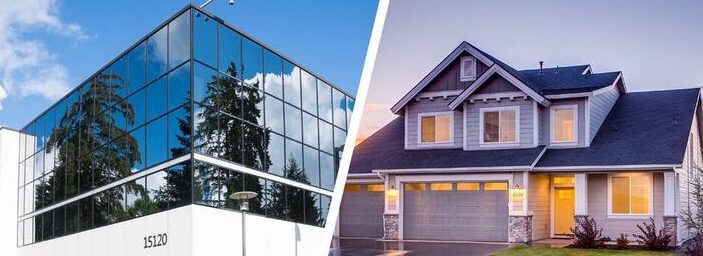
Residential and Commercial Construction: Key Differences Explained
Residential and commercial construction are the two most common types of building projects. On the surface, both involve planning, materials, workers, and a finished structure. But the two are quite different in how they are designed, how long they take, what materials are used, and what they cost. If you are a property owner, a business owner, or someone planning a new project, understanding these differences helps you make better decisions from the start.
This guide explains what sets residential construction apart from commercial construction, where they overlap, and what to look for in a contractor who handles both.
What Is Residential Construction?
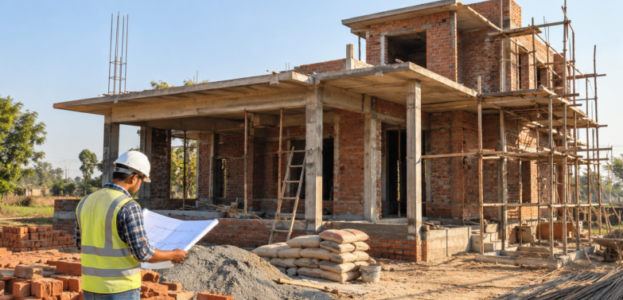
Residential construction is the process of building or renovating spaces where people live. This includes:
- Independent houses and bungalows
- Builder floors and duplex homes
- Flats and apartment buildings
- Villas and farmhouses
The goal in residential construction is to build a space that is comfortable, functional, and suited to how a family or individual lives. Design decisions here are personal room sizes, kitchen layout, number of bathrooms, and finish quality are all chosen by the homeowner.
What Is Commercial Construction?
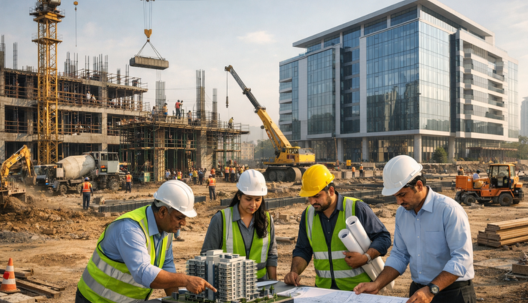
Commercial construction is the process of building spaces that are used for business or public purposes. This includes:
- Offices and corporate buildings
- Shops, showrooms, and retail spaces
- Hotels and guest houses
- Schools, clinics, and institutional buildings
- Warehouses and storage facilities
The goal in commercial construction is to build a space that is functional for a business one that can handle foot traffic, meet safety requirements, support electrical and mechanical systems, and present a professional image.
Residential vs Commercial Construction: A Quick Comparison
| Factor | Residential | Commercial |
| Purpose | Living spaces | Business / public use |
| Design focus | Comfort and personal preference | Function, safety, and footfall |
| Structure | Lighter load-bearing design | Heavier, more complex structure |
| Materials | Standard residential-grade | Heavy-duty, higher-grade |
| Timeline | Shorter (months) | Longer (months to years) |
| Approvals | Building plan approval | More approvals and compliance checks |
| Cost per sq ft | Generally lower | Generally higher |
Key Differences Explained
1. Design and Layout
In residential construction, design is driven by what the homeowner wants. Room sizes, ceiling heights, and layouts are decided based on personal preference and family needs. Homes are designed to feel warm, private, and comfortable.
In commercial construction, design is driven by how the space will be used. An office needs open workstations and meeting rooms. A shop needs clear customer flow and display areas. A clinic needs separate waiting and treatment spaces. Function always comes before aesthetics in commercial design.
2. Structure and Load
Residential buildings typically carry lighter loads furniture, appliances, and people. The structural requirements are simpler, and standard RCC (reinforced cement concrete) frames work well for most homes.
Commercial buildings need to support heavier loads machinery, large numbers of people, heavy storage, or industrial equipment. The structural design is more complex and requires detailed engineering calculations.
3. Materials Used
Residential construction uses standard-grade materials that balance quality and cost. Most homeowners choose materials based on finish quality and budget.
Commercial construction often requires heavier-duty materials higher-grade steel, stronger concrete mixes, fire-resistant materials, and commercial-grade electrical and plumbing systems. These are selected based on safety codes and the functional demands of the building.
4. Approvals and Compliance
For residential projects, the main requirement is a building plan approval from the local municipal body. The process is relatively straightforward for standard homes.
Commercial projects involve more approvals fire safety clearance, structural safety certificates, occupancy certificates, and in some cases, environmental clearances. These take more time and need to be planned well in advance.
5. Timeline and Cost
A standard residential home typically takes 6 to 14 months to build, depending on size and complexity. Costs are driven by material quality and finishing choices.
Commercial projects generally take longer and cost more per square foot due to the complexity of the structure, the number of systems involved (electrical, HVAC, fire safety), and the higher-grade materials required.
Where Residential and Commercial Construction Overlap
Despite their differences, residential and commercial construction share the same core process: planning, foundation, structure, services (electrical and plumbing), finishing, and handover. A construction company experienced in both types brings a wider range of skills they understand both the detailed, personal nature of residential work and the technical, compliance-driven demands of commercial projects.
Many property owners also find themselves needing both for example, a ground floor shop with a residential floor above, or a home office that needs to meet certain commercial standards. A company that handles both types is better placed to manage these mixed-use projects.
What to Look for in a Contractor for Either Type
- Experience in the specific type of construction you need residential, commercial, or both
- Ability to read and work from structural drawings and architectural plans
- Knowledge of the approval process and compliance requirements for your project type
- Clear, written quotation with a timeline and payment schedule
- A team that handles civil, electrical, and plumbing work in-house rather than outsourcing to unknown subcontractors
How M.A. Building Construction Handles Both
M.A. Building Construction works on both residential and commercial construction projects. On the residential side, the company builds independent houses, floors, and home extensions, handling everything from the foundation to finishing. On the commercial side, the team builds offices, shops, showrooms, and institutional spaces that meet functional and compliance requirements.
In both cases, the approach is the same: transparent pricing, quality materials, and a clear project plan so you always know where things stand.
Frequently Asked Questions
1.Can the same construction company handle both residential and commercial projects?
Yes. Many full-service construction companies work on both. The key is to check that they have actual experience in the specific type of project you need, not just one of the two.
2.Is commercial construction always more expensive than residential?
Generally, yes commercial buildings require heavier materials, more complex systems, and more approvals, all of which add to the cost. But the final number depends on the size and scope of the project.
3. What if I need a building with both residential and commercial use?
Mixed-use buildings are common. A contractor who handles both types is the right choice here, as they understand the different requirements for each part of the structure.
Whether you are building a home or a commercial space, M.A. Building Construction has the experience to handle it. Call +91 8130054148 for a free consultation and a clear, written estimate.
Recent Blog